China Top Ball Valve Manufacturers and Suppliers?

Time:2026-11-13 Author:Oliver
0%

Finding the right Ball Valve manufacturer in China involves more than comparing prices or browsing attractive product photographs. A dependable supplier should explain body materials, pressure ratings, seat options, testing methods, and production capacity clearly. The connection type and dimensions must match existing pipework. The valve must also suit its medium and operating cycle. Small differences can become costly. Not glamorous, but important.

This guide examines China’s leading Ball Valve manufacturers and suppliers, with practical ways to assess product range, technical support, and export experience. Company claims deserve careful checking. Ask for current certificates, inspection records, material traceability, and references for comparable applications. Confirm that certificates cover the specific factory, product, and standard; a logo alone proves little. Buyers should compare lead times, spare-part access, and warranty terms alongside unit cost. Where possible, review drawings and sample test reports before placing a large order. Direct questions can reveal how a supplier responds when specifications change or defects appear. Even a strong shortlist has limits. Online information cannot replace a factory audit or an application-specific engineering review. That gap matters.
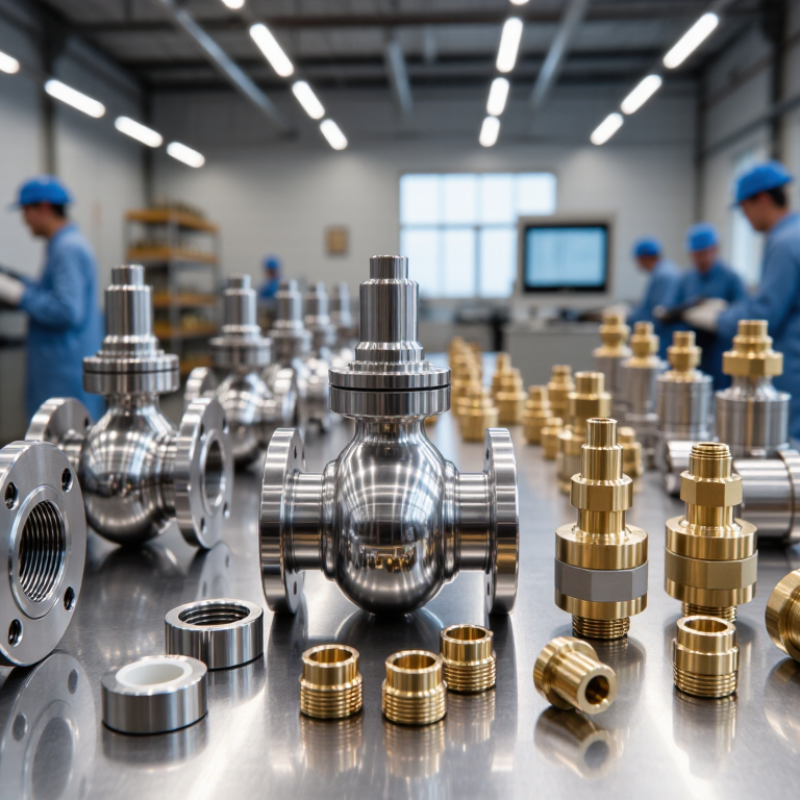
China Top Ball Valve Manufacturers and Suppliers?

Ball Valves: Design, Types, and Applications

Ball valves control flow with a bored sphere that rotates 90 degrees. Their quick action makes them useful for frequent isolation. A full-port design keeps the opening close to the pipe diameter, reducing flow restriction. Reduced-port models are often smaller and lighter. Floating-ball valves use line pressure to press the ball against a seat; trunnion-mounted designs support larger balls with additional anchors. Three-way versions can redirect flow. Small details matter.

Common applications include water treatment, chemical processing, and oil and gas systems. Some designs also handle steam when their materials and pressure ratings are suitable. Seat material, temperature, pressure, and fluid compatibility all affect performance. A valve that works well on clean water may wear quickly with abrasive particles. Grand View Research’s 2023 Industrial Valves Market report valued the global market at USD 76.4 billion in 2022. It forecast 4.8% annual growth through 2030. This figure covers industrial valves broadly, not ball valves alone.

Tips: Check the pressure-temperature rating and connection type before selection. Ask how the valve performs with the actual fluid, including any solids. Keep installation direction and maintenance access in mind; they are easy to overlook.

China’s Ball Valve Manufacturing Industry

China Top Ball Valve Manufacturers and Suppliers?

China’s Ball Valve Manufacturing Industry

China’s ball valve manufacturing base brings together metal casting, CNC machining, component sourcing, assembly, and pressure testing. In industrial clusters, buyers may find several production stages within relatively short supply chains. That can support quicker coordination. But a factory address alone says little about process control or product consistency.

Grand View Research’s 2024 Industrial Valves Market report valued the global market at USD 78.5 billion in 2023 and forecast a 4.3% annual growth rate from 2024 to 2030. This estimate covers industrial valves broadly, not China’s ball valve segment alone. Its scope matters. Published market estimates can differ, so buyers should also assess product-level evidence: material traceability, pressure-test records, seat-leakage results, and batch consistency. A polished sample is not enough.

Tips: Request a recent test report for the exact model and materials. Check records for coating thickness, operating torque, and inspection failures. Small details matter. For critical service conditions, consider independent inspection.

Leading Ball Valve Manufacturers and Suppliers in China

Leading Ball Valve Manufacturers and Suppliers in China serve oil, gas, water, chemical, and general industrial projects. Buyers should assess more than price. Check body materials, pressure class, seat design, end connections, and test documentation. A supplier’s ability to provide traceable material certificates and repeatable inspection records is especially important for critical service. Small details matter.

Grand View Research estimated the global industrial valves market at USD 78.6 billion in 2023 and projected 4.4% annual growth from 2024 to 2030. The report covers multiple valve types, not ball valves alone, so it signals broad demand rather than proving a specific supplier’s performance. For technical screening, compare offered designs with applicable requirements in ISO 5208 or API 608, then request pressure-test procedures and sample records. Test records matter.

Chinese suppliers vary in specialization, production scale, and export experience. A factory with in-house machining may control lead times better, while a trading supplier may offer wider product selection. Neither model guarantees quality. Ask how the supplier controls seat leakage, coating thickness, and dimensional inspection, and confirm these points against project specifications. One caution: polished catalogs can hide gaps in process evidence. Review drawings, inspection plans, and after-sales response before placing a large order.

China Top Ball Valve Manufacturers and Suppliers? - Leading Ball Valve Manufacturers and Suppliers in China

Evaluation Dimension Common Options or Reference What Buyers Should Verify
Valve design Floating, trunnion-mounted, top-entry, and three-way ball valves Confirm the design suits the required pressure, size, maintenance plan, and flow arrangement.
Port and flow path Full-port and reduced-port configurations are commonly available. Check bore diameter, pressure drop requirements, and compatibility with pipeline cleaning or pigging.
Body and trim materials Carbon steel, stainless steel, duplex stainless steel, and other specified alloys; seats may be polymeric or metal-seated. Request material grades and certificates, and check corrosion, temperature, and media compatibility.
Size and pressure class Available size and pressure ranges depend on valve design, materials, and applicable specifications. Verify the pressure-temperature rating against the project datasheet and the applicable design standard.
Design standards Depending on valve type and service, specifications may reference API 608, API 6D, ISO 17292, or ASME B16.34. Confirm the exact standard and edition required; these standards are not interchangeable for every application.
Fire testing Fire-test requirements may refer to API 607 or ISO 10497, depending on the valve and project specification. Ask for a valid test report or certification covering the offered design and configuration.
Actuation and mounting Manual lever or gear operation, or pneumatic and electric actuation; ISO 5211 may be specified for actuator mounting interfaces. Check operating torque, actuator sizing, fail position, control requirements, and mounting dimensions.
Testing and documentation Inspection and pressure testing should follow the purchase specification and applicable valve standard. Agree on inspection plans, test records, material traceability, and documentation before production.
Special-service requirements For sour service, NACE MR0175/ISO 15156 may be relevant when required by the service conditions and project specification. Confirm the service environment, material restrictions, and required compliance documentation.
Supplier qualification Assessment can include quality controls, manufacturing capability, inspection resources, and export documentation. Evaluate evidence relevant to the specific order, such as quality-system documentation, inspection records, and reference project experience.

Note: Product availability and ratings vary by design and supplier. Confirm all dimensions, materials, standards, and pressure-temperature limits against the approved project specification.

How to Compare Chinese Ball Valve Suppliers

Compare Chinese ball valve suppliers against the same operating conditions, not just their quotations. Specify fluid, pressure, temperature, bore size, end connection, and operating cycles. World Steel Association’s World Steel in Figures 2025 reports that China produced 1,005.1 million tonnes of crude steel in 2024. That indicates industrial scale, not valve quality. Check heat numbers, material certificates, and traceability for the actual components supplied. Small details matter.

Request pressure-test procedures and records aligned with ISO 5208, including test pressure, duration, and seat-leakage criteria. Compare what each price includes: actuator, coating, inspection, packaging, spare seats, and delivery. Ask for production photos or an audit, and confirm that sample test results match the quoted model and materials. A glossy brochure can mislead. Even a tidy scorecard misses details; I would give more weight to traceable records and clear answers than polished claims.

Quality Standards and Supplier Verification in China

China Top Ball Valve Manufacturers and Suppliers?
Quality Standards and Supplier Verification in China

Choosing a ball valve supplier in China takes more than comparing prices and catalogs. Start by matching the valve’s design and test requirements to its intended service. Ask which standards apply, and request the exact edition and scope. A certificate alone may not cover every valve size or material. Paperwork is not proof.

Review sample inspection records, pressure-test procedures, and material traceability documents. For a stainless-steel valve, the heat number on the body should connect to the mill certificate. Check that shell and seat leakage tests have recorded results, not just a tick in a box. Confirm dimensions, pressure ratings, and end connections against your specification. Small mismatches can become costly once valves reach the installation site.

Supplier verification should include a live factory assessment, when practical. Observe how staff identify test units and handle rejected parts. Ask who calibrates the pressure gauges and how often. A remote video call can help, but it cannot show everything. Even a careful audit may miss a weak process on another shift, so independent inspection of production samples can add useful evidence. Leave room for follow-up; supplier quality is not established by one visit.

China Ball Valve Supplier Verification: API 598 Pressure-Test Benchmarks

API 598 specifies pressure-test multipliers for applicable valve tests. Use these benchmarks when reviewing a supplier’s test procedures and inspection records; confirm the applicable rating basis, valve type, and current standard edition before comparing results.

FAQS

How does a ball valve control flow?

A bored sphere rotates 90 degrees to open or close the passage. It operates quickly. Small details matter.

What is the difference between full-port and reduced-port designs?

A full-port opening stays close to the pipe diameter, which limits flow restriction. Reduced-port models are often smaller and lighter.

How do floating-ball and trunnion-mounted valves differ?

Line pressure pushes a floating ball against its seat. Trunnion-mounted designs use additional supports for larger balls.

Can a ball valve handle steam or abrasive fluids?

It depends on materials, pressure, temperature, and fluid compatibility. Abrasive particles may wear seats quickly. I would check the actual fluid, not just the label.

What should buyers check before selecting a valve?

Review the pressure-temperature rating, connection type, seat material, and installation direction. Also leave room for maintenance access.

What information should a supplier provide?

Ask for material certificates, inspection records, pressure-test procedures, and drawings. Test records matter.

Does industrial valve market growth show demand for ball valves specifically?

No. The cited market estimates cover several valve types, not ball valves alone.

What should buyers verify before placing a large order?

Confirm seat-leakage checks, coating thickness, and dimensional inspection against project specifications. Review sample records and after-sales response, too. A polished catalog is not enough.

Conclusion

This article introduces the design, operating principles, and common types of Ball Valve, explaining how their quarter-turn mechanism supports reliable flow control in industrial and commercial systems. It also outlines applications across sectors such as water treatment, energy, chemical processing, and general manufacturing, where valve selection depends on factors including pressure, temperature, media, and operating conditions.

The article explores China’s ball valve manufacturing industry and the range of suppliers serving domestic and international markets, without focusing on individual brands. It offers practical criteria for comparing suppliers, including product range, engineering capability, production consistency, communication, customization, and delivery performance. It also explains how buyers can assess quality through relevant standards, technical documentation, inspection procedures, and supplier verification, helping them make informed sourcing decisions and choose products suited to their requirements.

Oliver

Oliver

Oliver is a seasoned marketing professional with a wealth of expertise in driving brand awareness and engagement. With a deep understanding of our company's product offerings, he consistently delivers high-quality content that enriches our professional blog. His insights not only shed light on......