What Are the Top Types of Electric Ball Valves?

Time:2026-10-30 Author:Ethan
0%

An Electric Ball Valve uses an electric actuator to turn a ball and control flow. Types differ by flow path, control duty, and actuator features. A two-way model serves one line; a three-way model can divert or mix flow. In a pump room, that choice determines whether water reaches a branch or bypass. Small detail.

Some valves provide simple on/off operation, while modulating models adjust the ball to intermediate positions. Their suitability depends on the required control signal and system response. Quarter-turn actuators are common, but torque, voltage, enclosure rating, and duty cycle still matter. A compact actuator may suit a small water circuit, yet struggle with a larger valve or demanding operating conditions. Check the data sheet.

This guide compares two-way and three-way designs, on/off and modulating types, and actuator options such as standard, spring-return, and smart-control models. It also considers practical selection details: port size, pressure and temperature limits, body and seal materials, and wiring requirements. The best fit depends on the fluid, piping layout, and control needs—not simply the purchase price. There is no universal best type. Product labels can be unclear, so verify the flow pattern and wiring diagram before installation. Site conditions can change the answer, and that deserves careful review.
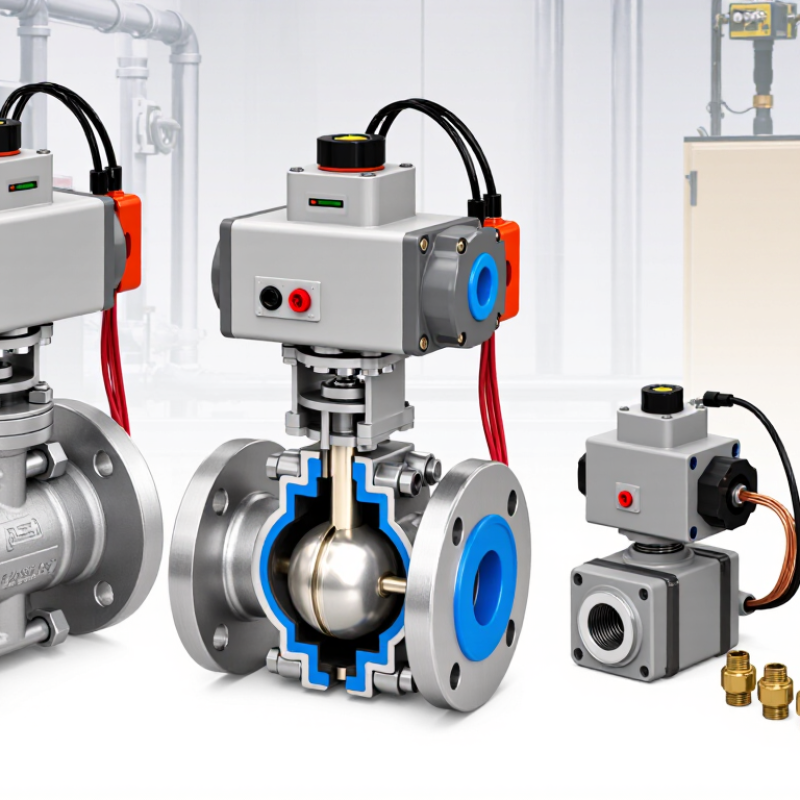
What Are the Top Types of Electric Ball Valves?

How Electric Ball Valves Are Classified

Electric ball valves are classified by how they operate, how fluid passes through them, and what conditions they handle. Most use a quarter-turn actuator to open or close the ball. Some support modulating control, adjusting flow in response to an electrical signal. These are different jobs. An on-off valve is not automatically suitable for precise flow control.

Port design is another useful category. Two-way valves start or stop flow along one path. Three-way versions use an L-port or T-port ball to redirect or mix flow. Valve bodies may be made from materials such as brass, stainless steel, or PVC. Selection depends on the fluid, temperature, pressure, and connection type. Actuators also differ: common options include on-off, proportional, and spring-return models. A frequent oversight is focusing on the valve alone. The actuator’s voltage, control signal, and response during power loss matter too.

Tips: Check the valve’s flow diagram and technical ratings before choosing. Match the body material to the fluid, then confirm pressure and temperature limits. If a system needs a safe position during an outage, verify that the actuator provides it. Small details can change the right classification. It is easy to miss one.

Two-Way Electric Ball Valves for Basic Flow Control

What Are the Top Types of Electric Ball Valves?
Two-Way Electric Ball Valves for Basic Flow Control

A two-way electric ball valve has one inlet and one outlet. Its rotating ball opens or blocks the passage, making it useful for straightforward on/off flow control. For example, it can start water moving through a pipe to a heat exchanger, then stop it when the system no longer needs flow. The quarter-turn action is simple to understand. Simple does not mean interchangeable.

Choosing the right valve involves checking pipe size, operating pressure, fluid compatibility, and actuator requirements. The valve’s materials must suit the fluid and temperature, while the actuator needs enough torque to turn the ball under actual operating conditions. Confirm the supply voltage and whether the system needs a defined position during a power loss. A two-way valve is not automatically a precise flow-regulating device; partially opening it may produce inconsistent control or increase wear. I have seen installations where the valve fit the pipe but not the control task. That mismatch is easy to overlook.

Tips: Check the flow direction and connection type before installation. Leave room to access the actuator, and test the valve through a full open-close cycle. Small details matter. If the process requires stable, adjustable flow rather than simple shutoff, reconsider whether a two-way ball valve is the right choice.

Three-Way and Multi-Port Valves for Flow Diversion

Three-way and multi-port electric ball valves redirect flow without adding separate valves at every branch. A three-way model can switch between two outlets or blend two inlets, depending on its port layout. Multi-port designs can serve more routes, but their internal passages must match the piping plan. A technician tracing the flow path on a drawing can catch a costly mismatch before installation.

The U.S. Department of Energy and Hydraulic Institute’s Improving Pumping System Performance: A Sourcebook for Industry reports that pumping systems use 25–50% of the energy in some industrial plants.

That figure describes whole pumping systems, not savings promised by a valve. Still, poor routing can create unnecessary recirculation or pressure loss. Small detail.

Specify the valve’s flow pattern, port size, pressure rating, and actuator torque against actual operating conditions. Check whether the actuator needs position feedback, too. A valve may fit the pipe and still fail to deliver the intended sequence. Multi-port bodies can simplify layouts, but they also make troubleshooting less intuitive; clear labels and an updated piping diagram matter in daily maintenance.

Floating-Ball and Trunnion-Mounted Valve Designs

Floating-ball and trunnion-mounted designs are two common choices in electric ball valves. In a floating-ball valve, the ball is held between two seats rather than fixed on a shaft at both ends. Line pressure helps press the ball against the downstream seat, creating a tight seal. This design is often compact and practical for smaller pipe sizes and moderate pressures. The electric actuator turns the stem, so sizing should account for operating pressure, seat material, and how often the valve will cycle. A small actuator mismatch can cause slow movement or incomplete closure.

Trunnion-mounted valves support the ball with upper and lower bearings. The seats move toward the ball to seal, which can reduce the torque needed to operate larger valves under higher pressure. That makes the design useful in demanding service, though its structure and maintenance needs may be more involved. Look closely at the actuator’s torque rating across the full operating range, not just its advertised peak. Also check the valve’s pressure limits and whether its materials suit the fluid and temperature. Details matter. In practice, the “better” design depends on the system, and selection can involve trade-offs that are easy to underestimate.

On/Off and Modulating Electric Ball Valves

On/off electric ball valves move quickly between fully open and fully closed positions. They suit isolation duties, such as shutting a water line when a leak sensor trips. A quarter-turn actuator is common, but response time depends on torque, supply voltage, and valve size. Check the actuator’s duty rating too: frequent cycling can overheat a unit designed for occasional operation. Simple does not mean effortless.

Modulating electric ball valves accept a control signal and hold intermediate positions to regulate flow. They can trim cooling-water flow as equipment load changes, though a standard ball valve may not control smoothly near its seat. Valve geometry, sizing, and signal resolution matter. The ISA/IEC 60534 control-valve standards describe flow characteristics and sizing methods that help engineers assess this behavior. For seat leakage, ANSI/FCI 70-2 defines Class IV as a maximum leakage of 0.01% of rated capacity under specified test conditions; it is a benchmark, not a guarantee for every electric ball valve. Specify the required leakage class and verify the complete valve-and-actuator assembly. Real systems are messier than datasheets. A poorly sized modulating valve may hunt, wear faster, or waste energy, even when its actuator appears precise.

FAQS

What are the main ways electric ball valves are classified?

They are grouped by operation, port design, body material, and actuator type. Each detail affects where the valve can work.

What is an on/off electric ball valve used for?

It opens or closes a flow path, such as isolating a water line after a leak sensor trips. It does not automatically provide precise flow control.

How does a modulating valve differ?

It accepts a control signal and holds intermediate positions to adjust flow. Poor sizing can cause uneven control or faster wear.

What do two-way and three-way designs do?

A two-way valve starts or stops flow along one path. A three-way valve can redirect or mix flow using an L-port or T-port ball.

How should I choose the valve body material?

Match the material, such as brass, stainless steel, or PVC, to the fluid and operating conditions. Check temperature and pressure limits too.

What actuator details should I check?

Confirm the voltage, control signal, response time, and duty rating. Frequent cycling may overheat an actuator made for occasional use.

What should I consider if power may fail?

Check whether the actuator moves the valve to a required safe position during an outage. It is easy to miss.

Can a modulating ball valve control flow smoothly?

Not always. Valve geometry, sizing, and signal resolution matter, especially near the closed position. Datasheets can look reassuring; real systems may behave differently.

Conclusion

Electric Ball Valves can be classified by their port arrangement, ball support structure, and operating function. Two-way models provide straightforward control by opening or closing a single flow path, making them suitable for basic isolation and flow regulation. Three-way and other multi-port designs offer additional routing options, allowing flow to be diverted or combined between connected lines.

Valve construction also affects how an Electric Ball Valve handles pressure and operating demands. Floating-ball designs use line pressure to help seat the ball, while trunnion-mounted designs support the ball with fixed bearings. In terms of operation, on/off valves switch between open and closed positions, whereas modulating valves adjust their position to provide more precise control. Understanding these categories helps match a valve’s configuration and control style to the needs of a particular system.


Ethan

Ethan

Ethan is a seasoned marketing professional with a deep expertise in our company's innovative product line. With a passion for sharing knowledge and insights, he takes the lead in regularly updating our corporate blog, where he explores industry trends, product features, and effective marketing......