 KR VAVLE
Hamburg Industrial Landscape & Ball Check Valve Operations
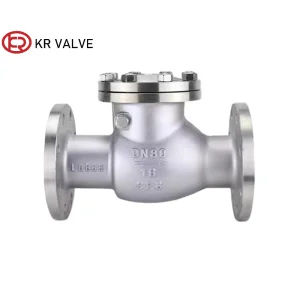
As a premier global logistics hub and Germany’s second-largest city, Hamburg is home to heavy-duty maritime transport structures, advanced chemical industries, and comprehensive public works. Specifically, the Port of Hamburg (Hafen Hamburg) and associated municipal entities such as HAMBURG WASSER require massive hydraulic installations that handle sewage, stormwater run-offs, and industrial slurry. In these operations, the prevention of fluid backflow is critical. The dynamic nature of wastewater, laden with debris, strings, and hard solids, makes the standard swing check valve prone to mechanical blockages.
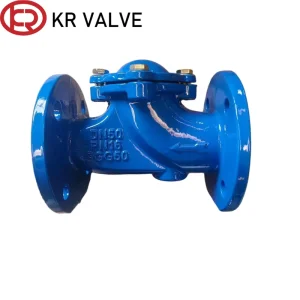
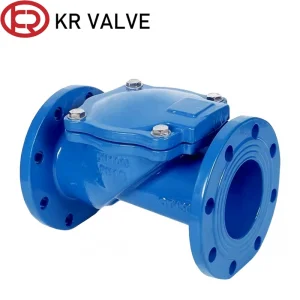
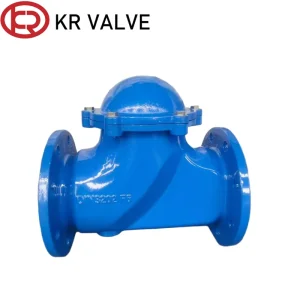
This is where the ball-type non-return valve excels. By utilizing a simple yet highly effective design—featuring a moving, elastomer-coated ball that is pushed aside by fluid pressure and returns to its seat to prevent backflow when gravity takes over—it eliminates the typical mechanical hinge and pin setups. In the challenging environmental settings of Northern Germany, these features ensure a clogging-free execution and significantly reduced maintenance downtime.
E-E-A-T Quality Analysis: The Engineering of High-Performance Ball Valves
To provide true value in mission-critical applications, a ball check valve's composition must survive the test of time under chemical wear and abrasive flows. Understanding the exact mechanical composition is essential for system integrity:
1. Elastomer Selection (EPDM vs. NBR vs. Viton)
The internal ball is core to the sealing capabilities. Typically formed out of aluminum or cast iron, it is hot-vulcanized with a precise thickness of elastomer. EPDM is widely preferred in Hamburg's municipal water systems due to its robust resistance to temperature fluctuations and biological activity. For oily effluents or hydrocarbon-rich water lines in petrochemical plants near Harburg, NBR or Viton (FKM) coating is deployed to avoid structural swelling or chemical degradation of the elastomer skin.
2. Valve Body Cast Integrity: GGG40/GGG50 Ductile Iron
Unlike standard cast iron (GG25), which is brittle, modern industrial specifications in Germany mandate Ductile Iron (EN-GJS-400-15 / GGG40 or EN-GJS-500-7 / GGG50). This material offers superior tensile strength and impact resistance, ensuring it can comfortably absorb sudden pressure spikes (water hammers) without risking micro-cracks or structural failure.
3. Hydraulic Flow Coefficients & Energy Efficiency
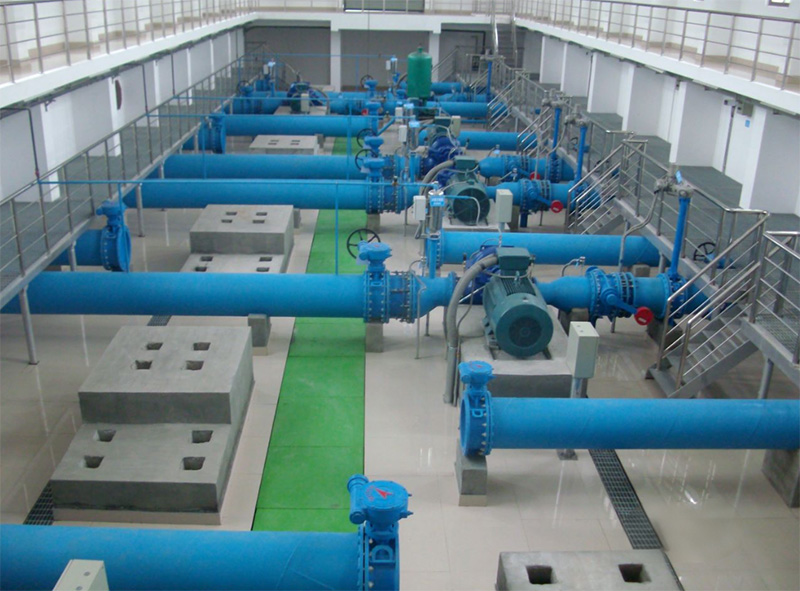
In large-scale pump installations, continuous energy consumption is a major concern. The design of our ball-type check valves allows the ball to shift completely out of the flow path. This provides a full-bore, unrestricted flow channel that minimizes friction losses (high Kv value) and saves significant pumping energy costs over the lifetime of the installation.
Bridging China's High-Capacity Production with Local German Regulatory Standards
European enterprises are continuously looking for ways to maximize capital efficiency without compromising on reliability. By sourcing from a specialized Chinese manufacturer that strictly aligns with global ISO 9001 and CE PED directives, procurement managers achieve the best of both worlds:
- Cost-Efficient Casting Scale: Advanced foundry lines in China provide unparalleled capacity for custom sizing, ranging from DN50 up to DN1000, catering to municipal-scale systems.
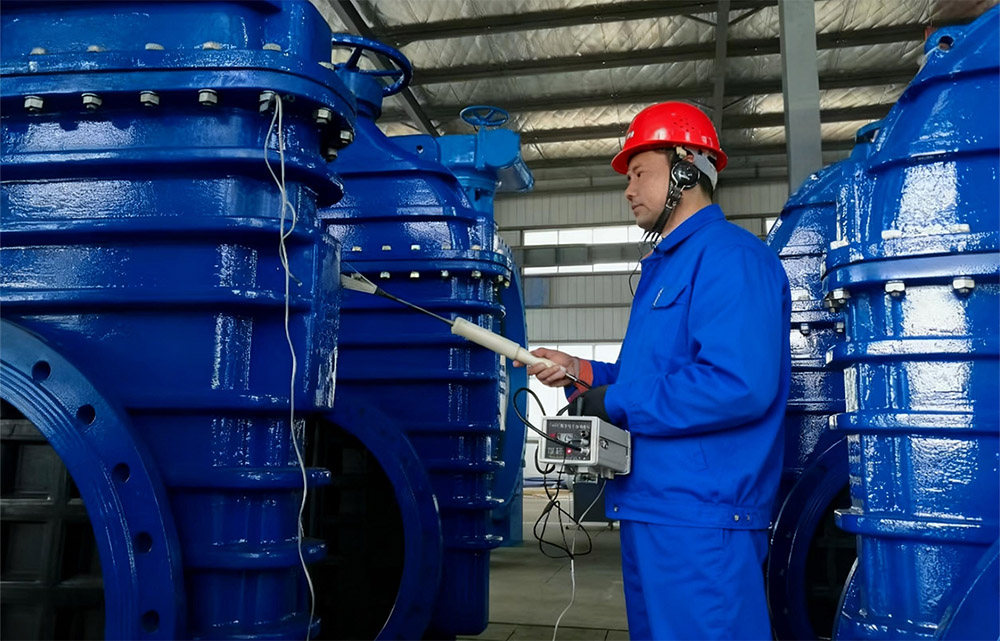
- Strict Quality Control: Testing procedures must conform to EN 12266-1 standard. Each valve undergoes shell testing (1.5x PN) and seat leakage testing (1.1x PN) to guarantee zero-leakage upon installation.
- Material Traceability: Deliveries are accompanied by EN 10204 3.1 Inspection Certificates, certifying the precise chemical composition of both the cast housing and internal trim.
Industry Standard compliance checklist for Hamburg installations:
✔ DIN EN 12050-4: Wastewater lifting plants. Non-return valves for faecal-free and faecal wastewater.
✔ DIN EN 12334: Industrial valves - Cast iron check valves.
✔ Directive 2014/68/EU (PED): Pressure Equipment Directive compliance for systems operating under high pressure lines.
✔ DVGW W270: Approval certifications verifying suitability for drinking water contacts where applicable.
Hamburg Localized Application Scenarios
We configure check valves to meet the specific requirements of Northern German industrial systems: