Engineered to meet strict municipal and industrial backflow prevention demands across Seattle, Bellevue, and the Puget Sound.
Analyzing flow control challenges in the Pacific Northwest's premier maritime and manufacturing hub.
Seattle, Washington, stands as the economic engine of the Pacific Northwest. Nestled between the saltwater of Puget Sound and the freshwater of Lake Washington, the city's geographical layout demands state-of-the-art water management, wastewater processing, and marine engineering systems. For engineering firms, municipal utility planners, and procurement leads, sourcing high-durability check valves (non-return valves) that comply with local guidelines and stringent environmental standards is critical.
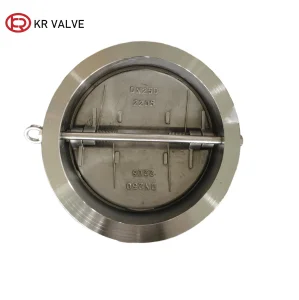
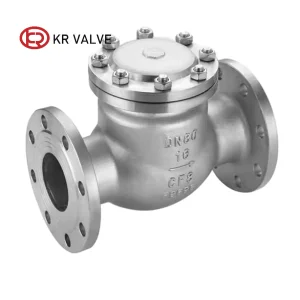
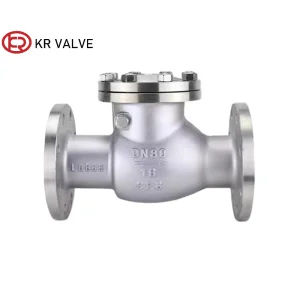
From the Port of Seattle to historic shipyards, vessels operating in salt-heavy marine environments require highly corrosion-resistant check valves. Grade CF8 and CF8M stainless steel check valves are baseline requirements to withstand sea spray, bilge waters, and high-salinity process loops, preventing backflow and protecting delicate onboard pumps.
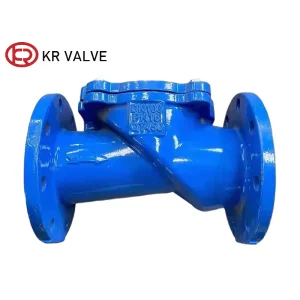
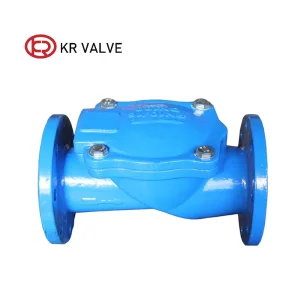
Seattle Public Utilities (SPU) maintains extensive water treatment, storage, and transmission systems. To maintain safe drinking water and avoid contamination risks from cross-connections, utility engineers specify AWWA C594 compliant dual-disc check valves and rubber flap check valves with NSF/ANSI certification to protect urban supply channels.
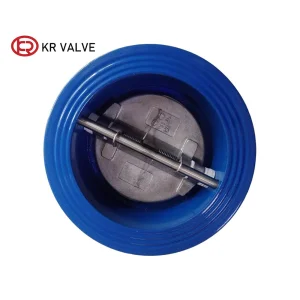
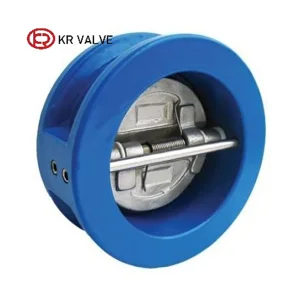
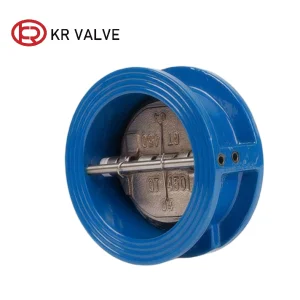
Moreover, the regional growth of cleanrooms, semiconductor manufacturing in the Greater Seattle area, and aerospace manufacturing facilities demands check valves with exceptionally low cracking pressures and bubble-tight sealing capabilities. Backflow of gases or process fluids in these high-tech systems can cause millions of dollars in equipment damage and halt assembly lines. Consequently, engineers are moving away from traditional swing check valves towards custom-engineered wafer dual-disc spring-loaded valves which offer rapid closure speeds and minimal pressure drop.
Backed by 20+ years of manufacturing expertise, delivering unparalleled engineering parameters.
A deep dive into flow dynamics, cracking pressures, water hammer mitigation, and material metallurgy.
The primary purpose of a non-return or check valve is to allow fluid flow in one direction while immediately stopping counter-current flow. The dynamics of how a valve opens and closes are dictated by fluid velocity and differential pressure. To prevent premature valve wear, it is imperative to match the system’s minimum velocity to the valve's fully-open velocity. If the system velocity is below this threshold, the disc or plates will hover or flutter, causing high mechanical wear on the pin, spring, and hinges, leading to catastrophic valve failure.
When selecting a dual-disc wafer check valve compared to a standard swing check valve, engineers must evaluate the head loss coefficient (Cv value). In dual plate models, the spring-assisted plates close faster than gravity-fed swing checks. This reduced closing time prevents the reverse flow from building velocity, mitigating the destructive energy of water hammer.
Water hammer occurs when fluid in motion is forced to stop or change direction suddenly, converting kinetic energy into shockwaves. Seattle's undulating topography, with steep elevation changes, accelerates pressure surge risks inside transmission mains. If a pump shuts off unexpectedly, the water column reverses direction almost instantly. If a slow-closing swing check valve is installed, the backflow will slam the valve disc shut against the seat, sending shockwaves through the piping network.
KR Valve addresses this via spring-loaded, dual-disc architectures. The spring force closes the plates at the precise moment flow velocity drops to zero, and before reverse velocity begins. This is defined as non-slam performance. Testing has proven that the spring-assisted closure reduces surge peaks by up to 85% compared to conventional weight-loaded check valves.
| Valve Type | Closing Speed | Water Hammer Risk | Pressure Drop (Cv) | Installation Footprint |
|---|---|---|---|---|
| Wafer Dual Plate | Extremely Fast | Very Low | Moderate | Ultra-Compact |
| Swing Check (Flanged) | Slow to Moderate | High | Very Low | Large |
| Rubber Flap Non-Return | Fast | Low | Moderate | Moderate |
| Silent Check (Axial Flow) | Instantaneous | Negligible | High | Moderate |
Choosing the correct combination of body material, disc, and soft seals is vital for ensuring longevity. In municipal drinking water applications, ductile iron (ASTM A536, GGG40/50) with an electrostatic epoxy coating offers structural strength and rust resistance. However, for industrial chemical manufacturing, food processing, or saltwater environments, cast iron is insufficient. Here, stainless steel CF8 (304) and CF8M (316) are specified to combat localized pitting and crevice corrosion.
How KR Valve ensures zero-leakage performance through vertically integrated engineering, production, and testing.
Our in-house R&D department utilizes advanced 3D CAD modeling and Computational Fluid Dynamics (CFD) simulation software to analyze flow velocities, turbulence, and pressure drop. This allows us to optimize internal valve geometries, ensuring lower cracking pressure and higher Cv ratings before casting begins. We develop bespoke configurations to fit tight piping spaces and custom pressure parameters.
Operated strictly under the ISO-9001 quality management framework, our manufacturing facilities houses over 15 machining stations, CNC lathers, and modular assembly lines. We manage raw material sourcing with complete trace-ability, casting inspections, and heat treatments. Every step is monitored to guarantee dimension tolerances align with global standards like AWWA, API, and DIN.
Our guiding principle is zero leakage. Our testing lab features dual hydrostatic test rigs that evaluate valve seats and shell integrity to API 598 or EN 12266 standards. Every check valve undergoes low-pressure air sealing tests and high-pressure water testing before packing. Certified test reports are generated and shipped alongside each product batch.
KR Valve's industrial grade solutions are trusted in critical projects across major global regions and Seattle enterprises.
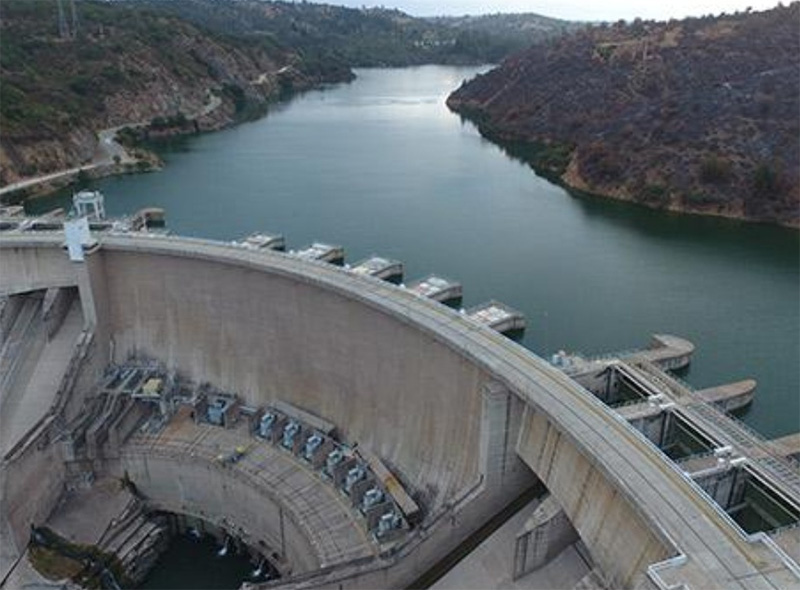
KR supplied a complete suite of high-strength water control check valves to optimize municipal treatment loops and sludge handling lines, ensuring backflow prevention under varying head pressures.
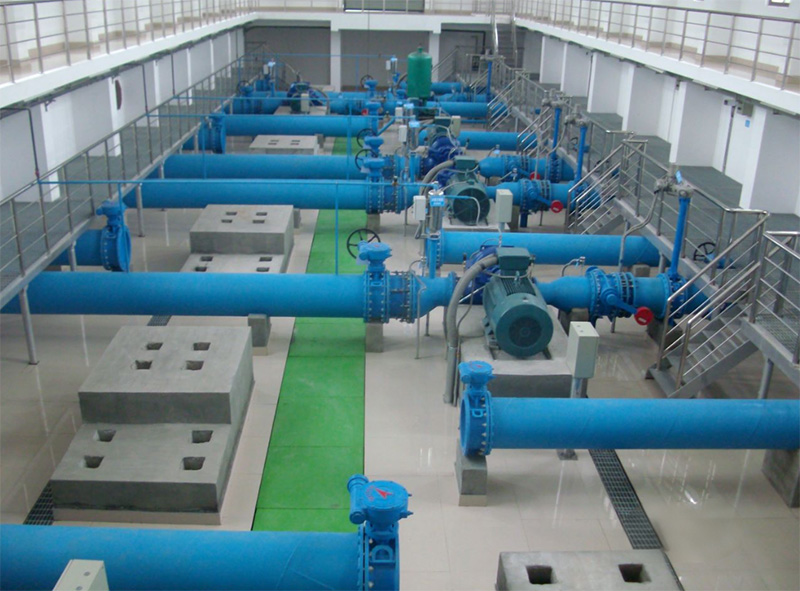
Large-scale municipal waterworks upgrade requiring massive eccentric butterfly valves and dual-disc spring check valves to combat water hammer issues over steep topography routes.
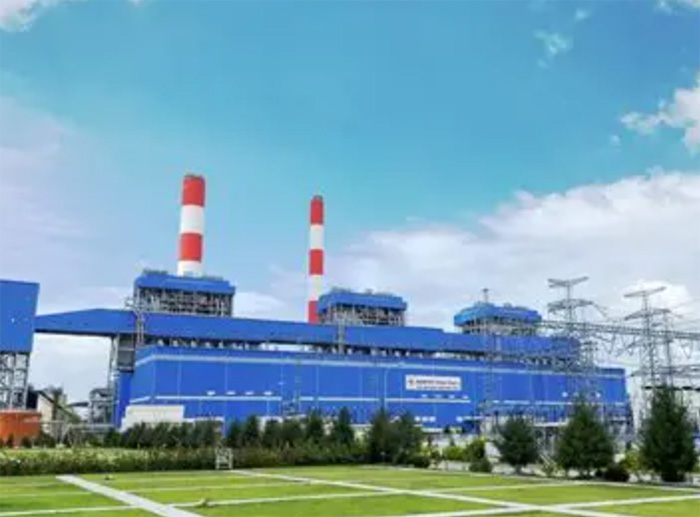
Sourced and engineered robust, corrosion-resistant CF8M stainless steel check valves with Viton seats for aggressive acidic waste lines and high-temperature processing loops.
Evaluating upcoming engineering improvements, digital integrations, and sustainability targets.
As the industrial sector transitions toward Industry 4.0, fluid management is no longer passive. The future of flow control lies in intelligent check valves and green materials. Our design team is currently researching sensor-integrated valve assemblies capable of monitoring internal pressure differentials, flow speed, and seat wear in real-time. By feeding this data into predictive maintenance software, operators can detect cavitation or structural scaling before a failure occurs, lowering facility downtime significantly.
Additionally, material science advances are allowing us to explore ultra-low weight composite materials and advanced seat coatings that reduce friction drag. Lower friction drag directly correlates to lower pump energy consumption, helping Seattle and Pacific Northwest enterprises reach their decarbonization and net-zero operational goals.
Navigating complex regulatory environments and supply chain challenges with confidence.
For engineering consultants drafting specifications in Washington State, navigating compliance can be complex. Depending on the installation point, check valves must meet specific codes:
KR Valve provides comprehensive engineering submittals, catalog documentation, material testing reports (MTRs), and compliance certification to speed up municipal approvals. Our logistics network ensures safe, timely shipping to warehouses or job sites across Seattle, Kent, Tacoma, and Bellevue, reducing lead times for emergency repairs or construction schedules.
Technical answers to typical engineering and sourcing challenges for check valves.
Examine our broader range of industrial backflow prevention solutions built for diverse industrial parameters.
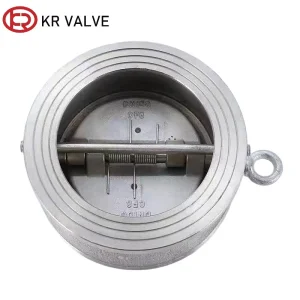
 KR VAVLE