Custom EPDM Ball Check Valve Supplier & Manufacturer

High-End Industrial Non-Return Flow Control Engineering for Global Water Treatment, Sewage Systems & Chemical Networks

Whitepaper: Hydrodynamics & Material Science of EPDM Ball Check Valves

1. Executive Summary & Hydrodynamic Architecture

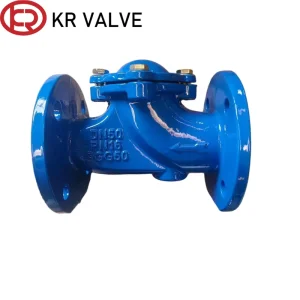
In modern heavy-duty fluid transfer networks, backflow mitigation stands as a primary engineering challenge. Conventional swing-type non-return valves are historically susceptible to mechanical clogging, rapid hinge pin fatigue, and substantial head loss. The EPDM-encapsulated ball check valve represents a major hydrodynamic step forward. By utilizing a free-moving, rotating hollow sphere acting as the closure member, this architecture ensures an unobstructed, full-bore flow path when open.

The fluid velocity pushes the ball completely out of the mainstream flow path, positioning it into a housing chamber designed to minimize vortex creation. The result is a highly efficient flow channel with exceptionally low pressure drop (high Cv coefficient). As reverse flow initiates, gravity combined with fluid backpressure naturally guides the EPDM ball back to its seated position, forming a bubble-tight, leak-proof seal. The continuous rotation of the ball during cycles distributes wear evenly across its entire surface, yielding a self-cleaning effect and extending operational lifetimes beyond typical mechanical hinge-pin layouts.

"By removing fixed pivot points and lever arms, EPDM ball check valves eliminate the mechanical friction focal points that traditionally trigger premature components failure in municipal wastewater and abrasive slurry applications."

2. Elastomer Material Science: The Vital Role of EPDM Curing

The performance of the non-return valve depends heavily on the chemical and mechanical properties of its elastomeric coating. Ethylene Propylene Diene Monomer (EPDM) is chosen for its excellent stability under oxidation, ozone exposure, and chemical aggression. However, the exact curing chemistry used during manufacturing dictates how the elastomer performs over time under dynamic stress.

At KR Valve, our custom EPDM formulations utilize peroxide curing processes rather than standard sulfur vulcanization. Peroxide-cured EPDM forms highly stable, three-dimensional carbon-to-carbon crosslinks. This formulation delivers superior resistance to high temperatures, lower compression set, and enhanced defense against chloramine-treated municipal drinking water.

Elastomer Property Sulfur-Cured EPDM (Standard) Peroxide-Cured EPDM (KR Custom Standard) Operational Advantage
Max Service Temp +100°C +135°C to +150°C Withstands periodic steam cleaning and hot water surges.
Compression Set Resistance Moderate (Deforms over long static periods) Excellent (Maintains original spherical profile) Guarantees bubble-tight sealing after long periods of inactivity.
Chloramine/Chlorine Resistance Poor (Accelerated polymer fragmentation) Outstanding (Stabilized carbon backbone) Crucial for municipal drinking water systems globally.
Elongation at Break High Moderate-High (Optimized structural density) Resists tearing when sealing against sharp micro-particles.

20+ Years of Manufacturing Integrity

A global partner backed by integrated design, strict production controls, and ISO-9001 certified pressure testing systems.

R&D & Custom Engineering
Our dedicated engineering division designs customized valves matching complex market requirements. Our modern testing lab is equipped with advanced finite element analysis (FEA) and dynamic flow simulation tools to continuously raise the ceiling of performance.
Strict Production Quality
Operating under the ISO-9001 quality framework, our factory utilizes over 30 sets of precision machining systems. Monthly inventory optimizations guarantee fast turnaround, with every component tracked through production.
Zero Leakage Inspection
Zero leakage is our core design standard. Our quality control division performs hydrostatic body and seat tests conforming to international standards (EN 12266-1 / API 598) before any shipment leaves our facility.
500+
Active Valve Products
50+
Export Countries
20+
Years of Engineering
100%
Hydrostatic Testing

3. Global Market Dynamics & Macro Solutions

As water treatment and fluid management systems grow more complex, selecting high-performance components has become critical to avoiding system failures. Globally, engineering consultants are shifting away from metallic-seated non-return systems in favor of EPDM-covered elastomeric check valves to combat water hammer issues.

In Europe and North America, strict environmental regulations mandate drinking water systems to use components that prevent heavy metal leaching and organic compound migration. Our custom EPDM ball check valves are built with lead-free ductile iron bodies (EN-GJS-400-15 / EN-GJS-500-7) coated in fusion-bonded epoxy (minimum 250 microns thick, complying with GSK standards). This design ensures full compliance with international drinking water certifications, including WRAS, NSF/ANSI 61, and ACS.

4. Custom Engineering and Structural Configurations

No single valve design fits all application environments. Our engineering division offers flexible, custom valve adjustments to meet your specific system requirements:

  • Ball Weight Optimization: We customize internal core densities (ranging from heavy steel cores to lightweight hollow designs) to adjust cracking pressures for low-pressure systems.
  • Body Geometries: Options include double-flanged configurations conforming to EN 1092-2 PN10/PN16 or ANSI B16.1 Class 125, alongside threaded connections for compact installations.
  • Specialized Elastomer Linings: For aggressive environments like mining slurries or acidic chemical processing, we offer specialized NBR, FKM, or PTFE options alongside our classic peroxide-cured EPDM models.

Global Partnerships & Successful Deployments

Examine our real-world track record across diverse municipal and industrial flow-control projects worldwide.

Chile: Dam Infrastructure
Supplied: Customized hydraulic water control valves.
Outcome: Rebuilt water routing systems to handle sudden pressure peaks, ensuring stable operations for downstream agricultural irrigation.
Italy: Municipal Waterworks
Supplied: Large-diameter butterfly valves and dynamic check valves.
Outcome: Improved flow coefficients and reduced pumping energy consumption across the regional water distribution network.
Indonesia: Sludge Plant
Supplied: Resilient seated butterfly valves and GGG50 gate valves.
Outcome: Achieved zero-clog operations when handling slurries with high solids concentrations (up to 8% dry solids).
Vietnam: Chemical Processing
Supplied: Corrosion-resistant PTFE and lined ball valves.
Outcome: Ensured leak-free containment of aggressive chemicals under acidic conditions, preventing pipeline pitting.
Russia: Natural Gas Extraction
Supplied: Heavy-duty metal-seated gate valves and ball valves.
Outcome: Maintained structural integrity and smooth operation under extreme sub-zero temperatures down to -45°C.
Brazil: Sewage Network
Supplied: Wastewater control valves and non-return check systems.
Outcome: Minimized fluid backflow in urban sewage pumping stations, reducing downtime caused by solids wrapping around standard swing valve hinges.

5. Technical Roadmap: Intelligent Check Valves and Next-Gen Elastomers

As industries move toward IoT integration and predictive maintenance models, the demand for smart flow control components is growing. KR Valve is actively developing the next generation of smart valves:

  • Dynamic Sensor Integration: Embedding non-intrusive proximity and pressure differential sensors within the valve body to track ball location, velocity, and seat seal wear in real-time.
  • Bio-Based Clean Elastomers: Refining our EPDM formulations to create ultra-smooth surfaces that resist biofilm growth in drinking water networks.
  • Carbon-Neutral Manufacturing: Upgrading our casting and molding processes to reduce energy consumption and lower the carbon footprint of each valve.

Technical Deep-Dive & FAQ

Read detailed answers to common technical questions about ball check valve operation, configuration, and elastomer selection.

Q1: How does a ball check valve prevent clogging when handling fluid with high solids?
Unlike traditional swing check valves that rely on internal pivot joints, hinges, and pins—which tend to catch fibers and sludge—a ball check valve uses a free-spinning EPDM-covered ball. When fluid flows through the valve, the ball is pushed out of the path, creating an unobstructed channel. The natural rotation of the ball continuously sheds particles and wipes the sealing seat clean during closure, preventing clogs.
Q2: Why is peroxide-cured EPDM preferred over standard sulfur-cured EPDM?
Peroxide curing forms stronger carbon-to-carbon crosslinks within the polymer structure. This chemical configuration improves heat aging properties, lowers compression set, and increases resistance to chemical treatments like chlorine and chloramines commonly found in drinking water, preventing the rubber from swelling or cracking over time.
Q3: Can a ball check valve be installed in a vertical pipeline?
Yes, ball check valves are suitable for both horizontal and vertical upward flow pipelines. In vertical piping, gravity works alongside system backpressure to return the ball to the seat. For horizontal installations, the valve must be positioned with the chamber angled upward to allow the ball to roll freely back to the sealing seat under gravity.
Q4: How does ball weight affect the cracking pressure of the valve?
The cracking pressure (the minimum pressure required to open the valve) is directly related to the weight of the ball. For systems with low operating pressures, we can customize the valve with a lightweight hollow-core ball. Conversely, for pulsating flow applications, we use a heavier solid-core ball to prevent valve chatter and stabilize flow.
Q5: What are the benefits of using a fusion-bonded epoxy coating (GSK approved)?
A GSK-approved epoxy coating (applied at a minimum thickness of 250 microns) forms a smooth barrier that prevents contact between the iron valve body and the fluid. This coating prevents internal corrosion, limits biofilm accumulation, and eliminates iron leaching in municipal water applications.

Ready to Secure Your System Engineering Flow?

Partner with a specialized EPDM check valve manufacturer to select and customize the correct valve designs for your pipelines.

Butterfly Valves

Manual & Pneumatic Resilient Seated

Gate Valves

EPDM Soft Sealed & Metal Wedge

Check Valves

EPDM Ball & Dual Plate Wafer Types

Water Control

Float & Reducing Diaphragm Systems

Y Strainers

WCB & Ductile Iron Protection Filters